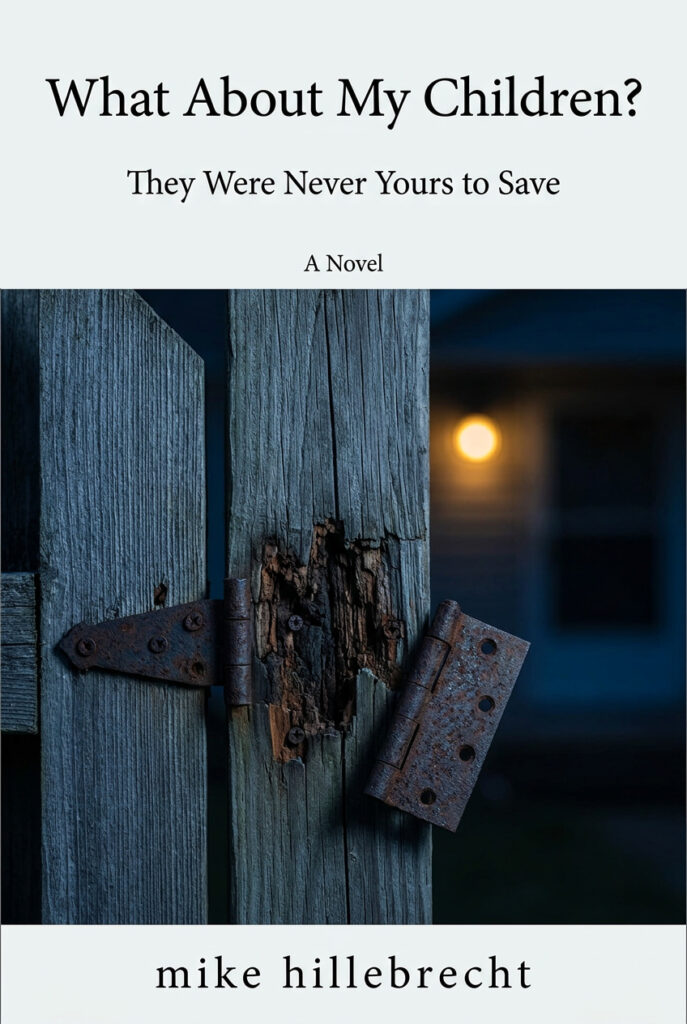
What About My Children?
Faith, Fear, and Loving the Children Who No Longer Believe
Mike Hillebrecht
Theological Nonfiction
At Tom Whitaker’s sixty-fifth birthday dinner, his youngest son says something about visitors from another world, and the table laughs the way a family laughs without thinking. Eli laughs too, then stops talking. One daughter has said she no longer believes in God. Another no longer trusts what the family was taught to call the Word of God. A son would rather take his daughter into the woods on Sunday than bring her back through the church doors. Tom spends the night deciding which conversation has to happen first. His wife, Elaine, has a different question: when did the children learn to stop finishing their sentences?
The Whitakers and their church, Riverbend, are fictional, and the foreword says so. Anna, a hospice worker, says she used to believe somebody was listening. Ben restores creeks and keeps his eight-year-old daughter, June, away from Riverbend because of what the church allowed to happen to a teenager named Caleb. Claire, a history teacher married to Isabel, was warned at nineteen that her questions could become a form of pride. Eli, who works in stage lighting, was laughed at for asking how an ancient witness would describe something unfamiliar.
The early chapters follow Tom and Elaine through the individual conversations, then through their own fears: Tom’s two o’clock dread of hell, witnessing run as a campaign, unanswered prayer. Chapters 10 through 12 make the children’s questions the parents’ own and distinguish the church from God, and God from the God the children say they do not believe in.
Chapter 13 is the turn. Tom and Elaine read Exodus 34 and the Hebrew word chesed, and the book names the Cosmological Grace Anchor: grace given in Christ before the ages began, prior to any response. Chapter 15 reads Matthew 25, Mark 9, 2 Thessalonians 1, and Revelation 20 carefully, and the author states plainly that eternal conscious torment conflicts with the book’s account of chesed and prior grace, while acknowledging that other Christians hold other positions. Prior grace does not make a child’s choices weightless. Love that stays tells the truth about harm.
The final chapters turn to the parents: stop trying to win, ask better questions, tell your story, let them tell theirs, and decide what to do when you strongly disagree. Chapter 22, “They Were Never Yours to Save,” ends at a family lunch. Nothing is resolved about belief. Eli finishes his story, and Tom listens to the end.
What About My Children? is written for the parent who loves an adult child who no longer believes, and who needs an account of God that does not depend on winning the next conversation.